Vibe coding promised the dream: describe what you want, and an AI builds it. In 2026, that dream is delivering — fast. Founders are shipping MVPs in hours. Internal tools materialise over a lunch break. The velocity is real.
But so is the wreckage.
A new service category has quietly exploded across the development industry: vibe coding cleanup. Agencies and specialist teams are being hired not to build software from scratch, but to rescue codebases that AI built and humans shipped without fully understanding. It is the fastest-growing niche in professional services, and it tells us something important about where software development is actually heading.
TL;DR
- Vibe coding cleanup is now a structured professional service category, with agencies specialising in rescuing AI-generated codebases that shipped too fast
- The “80% problem” means AI agents consistently nail the happy path but systematically miss error handling, security, and architectural consistency — and retrofitting that missing 20% costs more than building it right
- 95% of developers spend extra time debugging AI-generated code, and 45% of AI-generated code introduces OWASP Top 10 vulnerabilities
- Teams shipping AI-generated code see a 41% increase in code complexity and 30% rise in static analysis warnings within months
- The smartest approach is not to avoid AI coding tools — it is to pair AI speed with human architectural oversight from day one
The 80% Problem Nobody Warned You About
Here is the pattern we see repeatedly. A founder uses Cursor, Claude Code, or Lovable to build a product. The first pull request looks miraculous — a complete feature, generated in minutes, tests passing. By the fifth PR, something breaks in production. A missing retry. An unhandled null. An authentication check that exists on three endpoints but not the fourth.
The AI wrote code that works. It did not write code that survives.
This is what the industry is calling the 80% problem. AI coding agents are brilliant at the visible 80% — the features, the UI, the happy path. But they systematically omit the invisible 20%: non-functional requirements, failure modes, edge cases, and architectural consistency. That missing 20% is precisely what separates a demo from a product.
The cruel irony? Retrofitting that 20% after the fact costs significantly more than building it correctly the first time. AI-generated code often lacks the structural coherence that makes refactoring straightforward. Dependencies are tangled. Abstractions are inconsistent. The codebase looks professional but does not behave professionally under pressure.
What Vibe Coding Cleanup Actually Looks Like
Vibe coding cleanup is not traditional refactoring. It is a structured engineering process with its own methodology. Here is what a typical engagement involves:
1. Architectural Audit
Before touching a single line of code, the cleanup team maps the actual architecture against what the codebase claims to be. AI-generated projects frequently have contradictory patterns — half the codebase uses one state management approach, the other half uses another. Authentication logic is duplicated rather than centralised. Database queries are scattered across components rather than isolated in a data layer.
2. Security Triage
This is where the real urgency lies. Veracode’s research shows that 45% of AI-generated code introduces OWASP Top 10 vulnerabilities. The most common issues we encounter include hardcoded secrets, missing input validation, broken access control (where some endpoints enforce permissions and others do not), and SQL injection vectors hiding behind ORMs that are being used incorrectly.
3. Dependency Rationalisation
AI agents love adding packages. A typical vibe-coded application has three or four libraries doing roughly the same thing because different prompts produced different solutions. The cleanup team consolidates these, removes unused dependencies, and audits what remains for known vulnerabilities and licence compliance.
4. Error Handling and Resilience
Perhaps the most consistent gap: AI-generated code assumes the happy path. Network requests do not retry. Database connections do not handle timeouts. API responses are not validated. External service failures cascade into unhandled exceptions. Building proper resilience into a codebase that was never designed for it is painstaking, essential work.
5. Test Coverage That Means Something
AI agents are good at generating tests — but those tests tend to mirror the implementation rather than challenge it. They test that the code does what it does, not that it handles what it should. Cleanup teams write the tests that matter: edge cases, failure modes, integration boundaries, and the specific scenarios the AI never considered.
The Numbers Tell the Story
The data emerging from 2026 paints a stark picture:
- 95% of developers report spending extra time debugging and correcting AI-generated code (CodeConductor, 2025)
- 41% increase in code complexity in repositories that adopted AI coding tools (open-source analysis, 2026)
- 30% increase in static analysis warnings within months of AI tool adoption
- 19% productivity decrease reported by experienced developers using AI tools — velocity gains are offset by debugging and correction time
- Gartner projects that 75% of companies will face moderate to high technical debt severity due to AI code generation by end of 2026
These are not arguments against AI coding tools. They are arguments for using them properly.
Why This Is Happening Now
Three forces have converged to create the cleanup economy:
The vibe coding gold rush. Tools like Lovable, Bolt, Replit Agent, and Base44 lowered the barrier to shipping software to near zero. Non-technical founders built and deployed applications without understanding what was underneath. Many of those applications now have paying customers and real data — and real problems.
The context window limitation. Even the best AI coding agents lose coherence across large codebases. They make locally correct decisions that are globally inconsistent. Each prompt gets a reasonable answer; the sum of all those answers is architectural chaos.
The security reckoning. Regulators, enterprise customers, and insurers are starting to ask hard questions about how software was built. “An AI wrote it” is not an acceptable answer for SOC 2 compliance, GDPR data handling, or the EU AI Act’s transparency requirements.
How to Avoid Needing a Cleanup Crew
The smartest teams in 2026 are not avoiding AI coding tools. They are structuring their use of those tools to prevent the cleanup problem in the first place. Here is what works:
Pair AI speed with human architecture. Let the AI generate code within a structure that a human architect has defined. This means establishing patterns, conventions, and guardrails before the AI starts writing. CLAUDE.md files, architectural decision records, and structured spec files are not bureaucracy — they are the context that keeps AI output consistent.
Enforce security from the start. Run SAST and DAST tools on every PR, regardless of whether a human or an AI wrote the code. Treat AI-generated code with more scrutiny, not less, precisely because it looks confident and compiles cleanly.
Review for comprehension, not just correctness. If your team cannot explain why the AI made a particular architectural choice, that is a red flag. Code that works but is not understood is a liability waiting to surface.
Budget for the 20%. If you are using AI to accelerate the 80%, explicitly allocate time and expertise for the 20% the AI will miss. Error handling, security hardening, performance under load, and edge case coverage are not optional extras — they are the difference between a demo and a product.
The Bigger Picture
The rise of vibe coding cleanup tells us something fundamental about where software development is heading. AI has not eliminated the need for experienced developers. It has changed what experienced developers do. The value has shifted from writing code to understanding systems — knowing what questions to ask, what the AI missed, where the architecture will break under pressure.
This is good news for agencies and development teams with deep expertise. The demand is not going away; it is intensifying. Every vibe-coded MVP that finds product-market fit becomes a codebase that needs professional engineering. Every AI-assisted enterprise project needs someone who understands the difference between code that compiles and code that scales.
At REPTILEHAUS, we have been doing this work since before it had a catchy name. Rescuing codebases, hardening architectures, and turning prototypes into production systems is core to what our development team does. If your AI-generated project has outgrown its foundations — or if you want to build with AI from the start without creating a cleanup problem — get in touch.
The tools have changed. The engineering has not.
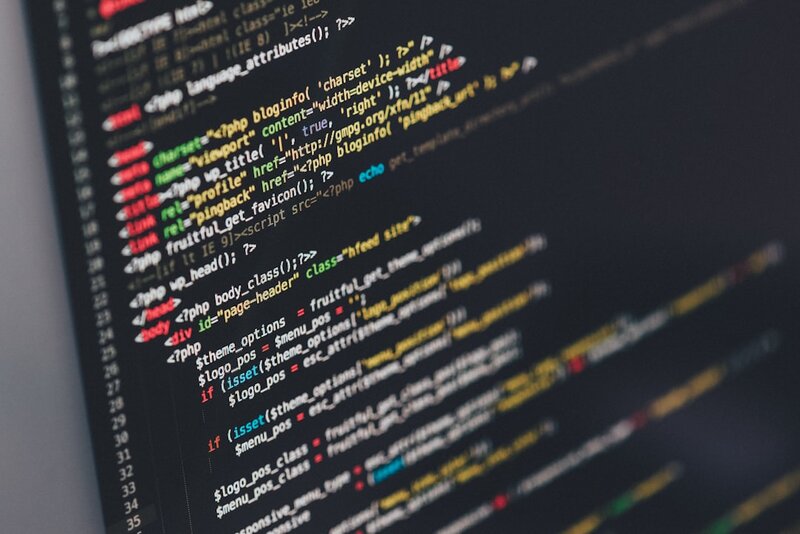
📷 Photo by Ilya Pavlov on Unsplash