
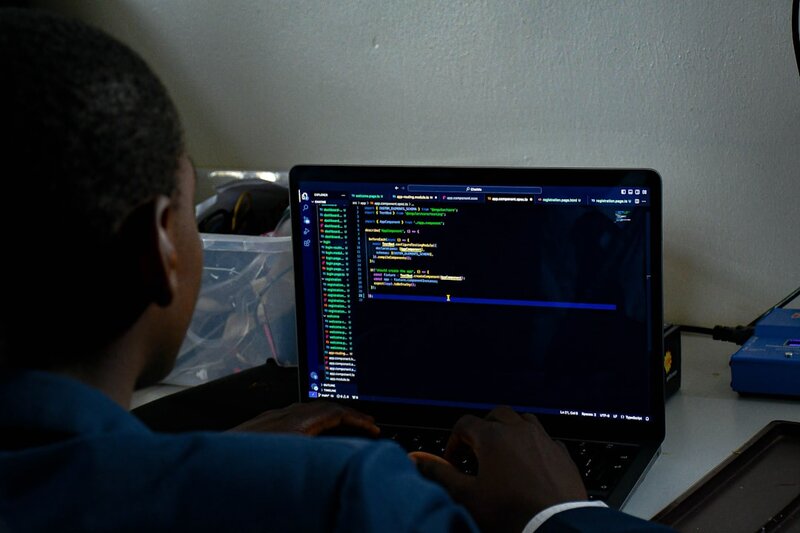
If you have been anywhere near the tech world in early 2026, you have heard the term “vibe coding.” Coined by Andrej Karpathy, the concept is simple: describe what you want in natural language, let an AI build it. Tools like Cursor, Bolt, Lovable, and Replit Agent have turned this from a novelty into a genuine movement. Gartner now projects that 60% of all new code will be AI-generated by the end of 2026.
As a development agency, we have strong feelings about this. Not because we are threatened by it. Because we have spent the last several months watching what happens when vibe-coded projects meet reality.
TL;DR
- Vibe coding tools are genuinely impressive for prototyping and MVPs, but most production applications still need human architectural decisions.
- The biggest risk is not bad code. It is code that works perfectly today and becomes unmaintainable tomorrow.
- Professional development teams should adopt vibe coding as an acceleration tool, not a replacement for engineering discipline.
- Security, testing, and architectural coherence remain human responsibilities, at least for now.
- The real winners will be developers who learn to collaborate with AI tools effectively, not those who resist them or blindly trust them.
What Vibe Coding Actually Is (And Is Not)
Vibe coding is not just autocomplete on steroids. The latest generation of tools can scaffold entire applications from a conversation. Cursor’s Composer 2 model, released just last week, can navigate a full codebase, understand dependencies, and make coordinated changes across multiple files. Claude Code, Codex, and similar agent-based tools can run terminal commands, fix their own errors, and iterate until tests pass.
This is genuinely transformative for certain workflows. Need a quick internal tool? A landing page? A data dashboard? These tools can get you from idea to working prototype in minutes rather than days.
What vibe coding is not: a replacement for software engineering. The distinction matters. Writing code and engineering software are not the same activity. Code is the output. Engineering is the thinking that determines whether that output will still work when you have 10,000 users, when your requirements change, when someone discovers a security vulnerability at 2am on a Sunday.
Where Vibe Coding Excels
Prototyping and validation. This is the clear winner. If you need to test whether an idea has legs before committing development resources, vibe coding tools are unbeatable. We have started using them internally for client proof-of-concepts, and what used to take a week now takes an afternoon. The speed lets you fail faster and cheaper, which is exactly what early-stage products need.
Internal tools. That admin dashboard nobody wants to build? The CSV import script that marketing needs? The Slack bot for standup reminders? These are perfect vibe coding targets. The stakes are lower, the users are forgiving, and the maintenance burden is manageable.
Boilerplate elimination. Every developer knows the pain of wiring up authentication, setting up a database schema, configuring CI/CD pipelines. AI tools handle this tedium brilliantly, freeing developers to focus on the business logic that actually differentiates their product.
Learning and exploration. Trying a new framework? Experimenting with an unfamiliar API? Vibe coding tools act as an incredibly knowledgeable pair programmer who never gets impatient. For learning, they are exceptional.
Where It Falls Apart
Architecture at scale. AI tools optimise for the immediate ask. They do not think about how your system needs to evolve over the next two years. We have reviewed several vibe-coded applications that worked beautifully as prototypes but had fundamental architectural problems: tightly coupled components, no clear separation of concerns, database schemas that could not handle the next feature without a full rewrite. The code worked. The architecture did not.
Security. This is our biggest concern. Vibe-coded applications routinely ship with SQL injection vulnerabilities, exposed API keys, missing input validation, and authentication logic that looks correct but has subtle bypass routes. The code passes a casual review because it follows patterns that look right. The problems are in what is missing, not what is present. A recent study found that developers using AI assistants produced less secure code and were more confident about its security. That combination is dangerous.
Consistency across a codebase. When one AI session scaffolds your user module and another handles payments, you end up with two different approaches to error handling, two different logging patterns, and two different ideas about how to structure a service. This inconsistency compounds over time into genuine maintenance debt.
Edge cases and error handling. Vibe coding produces happy-path code. It handles the 90% case elegantly. The remaining 10%, the network timeout during a payment, the race condition when two users edit the same record, the graceful degradation when a third-party API goes down, is where production applications live or die. AI tools consistently underperform here because edge cases require understanding the specific business context and failure modes of your particular system.
The Agency Perspective
We are not anti-vibe-coding. We use AI tools daily. Our developers are faster with them. But we have also spent significant time rescuing projects that were vibe-coded into existence and then hit a wall.
The pattern is remarkably consistent: a founder or small team uses Cursor or Bolt to build a working v1. It launches. Users arrive. Feature requests pile up. And then they discover that adding a seemingly simple feature requires restructuring half the application because the AI-generated architecture was not designed for extensibility.
This is not a failure of the tools. It is a misunderstanding of what they are for. Vibe coding is brilliant for the zero-to-one phase. The one-to-ten phase still needs engineering discipline.
How Professional Teams Should Adopt Vibe Coding
Based on what we have seen work (and fail), here is our recommended approach:
1. Use AI for generation, humans for architecture. Let AI tools write the implementation. Keep architectural decisions, database design, and security requirements as human-driven activities. Write your architecture documents and interface definitions first, then let AI fill in the code.
2. Treat AI-generated code as a first draft. Review it with the same rigour you would apply to a junior developer’s pull request. Look for security issues, test coverage gaps, and architectural consistency. Do not merge vibe-coded output without review.
3. Invest in testing. If anything, AI-generated code needs more testing, not less. Automated test suites catch the subtle bugs that look correct in review. We have written about evolving your QA strategy for AI-generated code in detail.
4. Establish coding standards that AI must follow. Most vibe coding tools accept system prompts or project-level configuration. Use these to enforce your team’s patterns: error handling conventions, logging standards, naming conventions. The more guidance you give, the more consistent the output.
5. Know when to stop vibing and start engineering. Prototypes get vibe-coded. Production systems get engineered. The transition point is when real users depend on the software. Plan for a refactoring phase between prototype and production.
What This Means for the Industry
Vibe coding is not going away. It is going to get better. The tools we have today are the worst they will ever be. Within a year, the architectural awareness, security analysis, and contextual understanding of these tools will improve significantly.
But the fundamental dynamic will remain: AI tools are excellent at generating code and poor at making the judgment calls that determine whether a software project succeeds or fails. Those judgment calls, understanding business requirements, anticipating scale challenges, making security trade-offs, navigating technical debt, are what professional development teams provide.
The developers and teams that thrive will be those who learn to use AI as a force multiplier rather than a replacement. The ones who struggle will be those who either reject the tools entirely or trust them without oversight.
Need Help With the Transition?
Whether you are integrating vibe coding tools into your development workflow, rescuing a vibe-coded prototype that needs production-grade engineering, or building something new and want to get the AI-human balance right from the start, REPTILEHAUS can help. We have been building production software for years and using AI tools to do it better, not replace the thinking.
📷 Photo by Ibrahim Yusuf on Unsplash