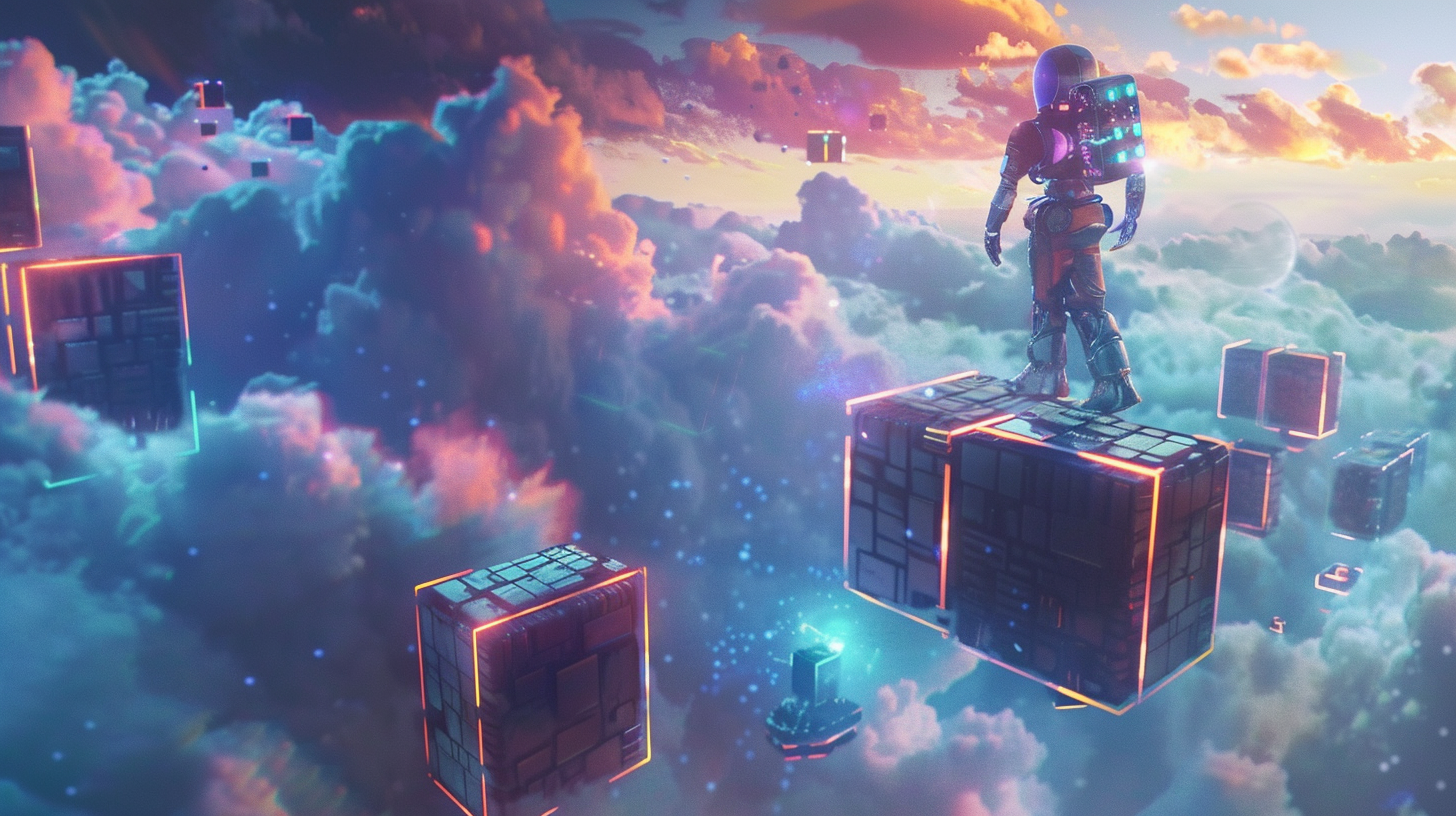
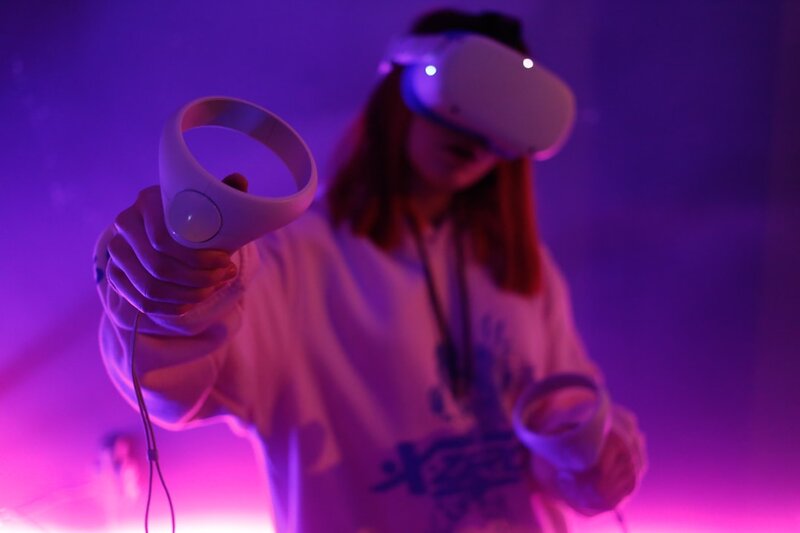
For years, immersive web experiences were a curiosity — impressive demos that never quite made it into production roadmaps. That changed in 2026. WebXR adoption surged 40% this year, Safari finally enabled the API by default on visionOS 2, and every major browser now supports the core WebXR Device API. The immersive web is no longer experimental. It is a production-ready platform, and development teams that ignore it risk falling behind.
TL;DR
- WebXR adoption grew 40% in 2026, with full cross-browser support now including Safari on Apple Vision Pro
- Real businesses — IKEA, Shopify merchants, real estate firms — are shipping browser-based AR and VR experiences without app downloads
- WebGPU’s widespread support brings near-native rendering performance to browser-based 3D, closing the last major technical gap
- Development teams with existing web skills can build immersive experiences using mature frameworks like Three.js, A-Frame, and Babylon.js
- The biggest risk is not technical complexity — it is treating WebXR as a gimmick rather than a strategic channel for customer engagement
Why Now? The Three Catalysts
WebXR has been a W3C specification since 2018, so what changed? Three things converged in the past twelve months to push it from interesting experiment to viable production technology.
1. The Safari Gap Closed
Apple’s long-standing reluctance to support WebXR was the single biggest blocker for enterprise adoption. No one wanted to build an immersive web experience that excluded every iPhone and iPad user. When Apple enabled WebXR by default in Safari on visionOS 2, with a new gaze-and-pinch input mode for Vision Pro, it sent a clear signal: the immersive web is part of Apple’s platform strategy, not a competitor to it.
Chrome, Edge, Firefox, Samsung Internet, Opera, and Meta Quest Browser already had full support. Safari was the last domino, and it fell.
2. WebGPU Reached Critical Mass
WebGL served the 3D web well for over a decade, but its age showed. WebGPU — the modern successor — landed cross-browser support in 2026, bringing compute shaders, modern rendering pipelines, and near-native GPU performance to browser-based applications. For WebXR, this means smoother frame rates, more complex scenes, and the kind of visual fidelity that users now expect from immersive content.
We covered WebGPU’s mainstream moment earlier this year. The timing is not coincidental — WebGPU and WebXR are complementary technologies that together make the browser a credible platform for rich 3D experiences.
3. The Hardware Ecosystem Expanded
Meta Quest 3S brought mixed-reality headsets below the €300 price point. Apple Vision Pro — while expensive — validated spatial computing as a category. Samsung Galaxy XR launched with full WebXR support in its browser. And crucially, every smartphone manufactured in the past three years can run WebAR experiences through the camera.
The addressable audience is no longer a handful of early adopters with dev kits. It is billions of smartphone users and a rapidly growing installed base of headsets.
Real Businesses, Real Use Cases
The shift from demo to production is most visible in how businesses are deploying WebXR today.
E-Commerce: Try Before You Buy
IKEA’s WebAR product visualisation lets customers place furniture in their rooms through the browser — no app download required. Shopify merchants offer the same capability through standard product pages. The conversion lift is significant: products with AR previews see 40% fewer returns and measurably higher add-to-cart rates.
The critical insight here is not the technology — it is the elimination of friction. Every app download you require is a funnel step where you lose customers. Browser-based AR removes that barrier entirely.
Real Estate and Architecture
Estate agents are sending prospective buyers a link — not an app — to walk through properties in immersive 3D. Architectural firms share browser-based walkthroughs of unbuilt spaces with clients and planning authorities. The common thread: accessibility. A URL works on any device, requires no installation, and can be shared via email, WhatsApp, or social media.
Training and Education
Industrial training programmes are deploying WebXR modules that employees access through standard web browsers. The advantage over native VR applications is deployment simplicity: update the web application once and every user gets the latest version on their next visit. No app store review cycles, no version fragmentation, no IT department installing software on every headset.
Events and Marketing
Product launches, virtual showrooms, and interactive brand experiences are increasingly delivered through WebXR. The economics are compelling — build once, deploy everywhere, track engagement with standard web analytics.
The Developer Experience in 2026
One of the most common misconceptions about WebXR is that it requires specialist 3D programming knowledge. In reality, the framework ecosystem has matured to the point where web developers with JavaScript experience can build production-quality immersive experiences.
Frameworks That Lower the Barrier
Three.js remains the workhorse of 3D web development, with mature WebXR integration and an enormous community. A-Frame, built on top of Three.js, uses an HTML-like entity-component syntax that feels familiar to any web developer. Babylon.js offers a more opinionated, feature-rich toolkit with excellent TypeScript support. PlayCanvas provides a visual editor that bridges the gap between design and development.
All four have production-grade WebXR support, active maintenance, and strong documentation. The choice between them is more about team preference than capability.
What You Actually Need to Build
A typical WebXR project involves:
- Scene management — loading 3D models (glTF is the standard format), lighting, and camera setup
- Interaction handling — controllers, hand tracking, gaze input, or touch on mobile AR
- Performance optimisation — level-of-detail switching, texture compression, draw call management
- Responsive immersion — graceful fallback from VR to AR to flat-screen depending on the device
None of these are fundamentally different from the concerns web developers already manage. You are still building for the browser. The rendering pipeline is more complex, but the deployment model, tooling, and debugging workflow are familiar.
Where Teams Get It Wrong
Having worked with clients exploring immersive web projects, we see the same mistakes repeatedly.
Building for VR First
Start with WebAR on mobile. The audience is orders of magnitude larger, the development complexity is lower, and you can validate the business case before investing in full VR experiences. A product visualisation feature that works on every smartphone delivers more value than a VR showroom that requires a headset.
Ignoring Performance Budgets
Immersive experiences must hit 72-90 frames per second consistently to avoid motion sickness. This is not optional. Teams accustomed to targeting 60fps for standard web applications need to rethink their performance budgets, asset pipelines, and testing practices. Profile early, profile often, and test on actual hardware — not just desktop browsers.
Treating It as a Gimmick
The most successful WebXR deployments solve real problems: helping customers visualise products, training employees safely, or making remote collaboration more effective. If your WebXR feature exists because someone in marketing thought it would be cool, it will not deliver ROI. Start with the user problem, then evaluate whether immersive technology is the right solution.
What This Means for Your Web Strategy
You do not need to rebuild your entire web presence around WebXR. But you should be thinking about where immersive experiences fit into your product or customer journey.
For e-commerce teams: WebAR product visualisation is approaching table stakes. If your competitors offer try-before-you-buy and you do not, you are at a disadvantage.
For SaaS companies: Consider whether spatial interfaces could improve data visualisation, onboarding, or collaboration features. The browser is now capable of delivering these without plugins or downloads.
For agencies and consultancies: WebXR is a differentiator. Clients are starting to ask about immersive web experiences, and teams that can deliver them will win work.
For everyone: Ensure your web infrastructure — CDN configuration, asset pipeline, performance monitoring — can handle 3D assets and the higher bandwidth requirements they bring.
Getting Started Without the Overhead
If you are exploring WebXR for the first time, here is a pragmatic path:
- Audit your use case. Identify one customer-facing scenario where spatial or immersive interaction would genuinely improve the experience.
- Prototype with A-Frame. Its HTML-like syntax means your existing web team can build a proof of concept in days, not weeks.
- Test on real devices. Borrow a Quest 3S, test on iPhones and Android devices, and check Safari on Vision Pro if you can access one.
- Measure what matters. Conversion rates, engagement time, return rates — tie your WebXR feature to business metrics from day one.
At REPTILEHAUS, we help businesses evaluate and build immersive web experiences — from initial feasibility assessment through to production deployment. If you are considering WebXR as part of your digital strategy, get in touch. We will help you separate the genuine opportunities from the hype.
📷 Photo by Adrià García Sarceda (@leonidasph) on Unsplash