
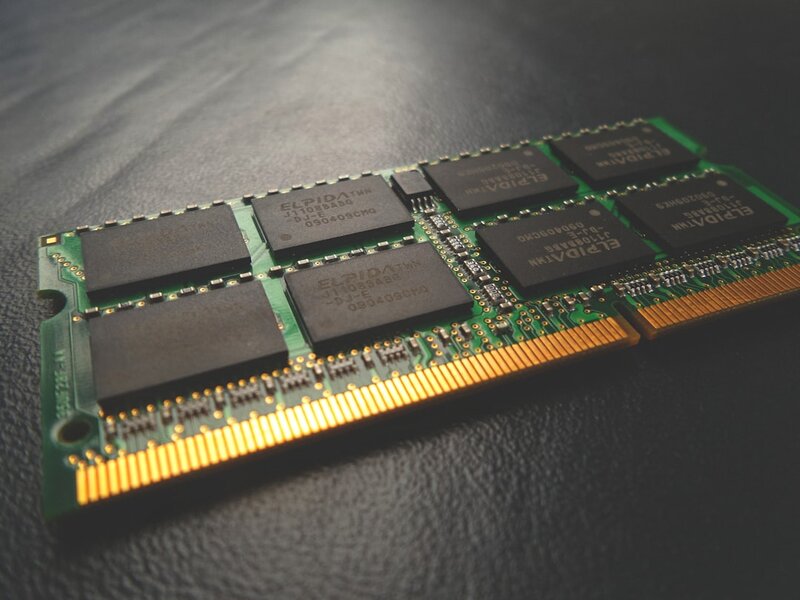
A 128GB DDR5 kit crossed $3,399 on retail listings this month, and the thread about it hit the Hacker News front page. That number is easy to file under “PC building is expensive now” and forget. The more useful data point came from Hetzner in the spring: the 128GB RAM add-on on its cloud servers went from €45.88 to €264.00 per month, a 575% increase, applied immediately. Not a component. A line on an invoice.
No architecture diagram has a box for semiconductor wafer allocation. But that is what has repriced infrastructure across the industry in 2026, and the effect is not evenly distributed. It lands hardest on choices that were considered best practice for the last fifteen years.
TL;DR
- DRAM makers have shifted wafer capacity from commodity DDR5 to High Bandwidth Memory for AI accelerators. HBM carries better margins and eats roughly three times the wafer capacity per bit, so the reallocation removes more supply than it adds product.
- TrendForce puts AI data centres above 30% of global DRAM output, heading beyond 50% by 2027. IDC expects 2026 supply growth of only 16%, against a 20% to 30% historical norm.
- Hetzner raised prices up to 37% from 1 April 2026, adjusting three times this year. OVHcloud announced 5% to 10%. Analysts expect 5% to 10% from AWS, Azure and Google Cloud in H2 2026.
- Increases are not uniform: roughly 3% to 7% on compute-optimised instances, considerably worse on Redis, ElastiCache, in-memory databases and high-memory tiers. Your architecture determines your exposure.
- Buying hardware is not the obvious escape. Dell servers are up 15% to 20% and GPU systems 30% to 50%. Normalisation is not expected before 2027 or 2028.
What actually happened
The word “shortage” invites the wrong mental model. Supply did not collapse: there was no fire, no flood, no export ban. Three companies (Samsung, SK Hynix and Micron) make the overwhelming majority of the world’s DRAM, each with a finite wafer count per quarter, and those wafers can become commodity DDR5 or HBM stacks for AI accelerators. Given the margin difference, the allocation decision is not a mystery, it is arithmetic. The manufacturers are behaving rationally and the rest of the market is bidding for what is left.
The downstream numbers follow. Contract DRAM prices rose roughly 90% to 95% quarter on quarter in January 2026 by several accounts, with more through Q2. Retail tracks it crudely: a 32GB DDR5 kit near $100 in September 2025 was clearing $400 by mid-2026. NAND has followed, with enterprise SSDs reported up around 80%. Figures vary by source and week, so treat any single percentage as directional.
Relief depends on new fabrication capacity, and fabs take years. Intel and Silicon Motion have both pointed at 2028, and SK Hynix has floated the possibility it runs past 2030. HBM supply is reported as fully contracted through the end of 2026, so the buyers with committed volume are already ahead of you in the queue.
Why this reaches your invoice even if you never touch a server
Cloud pricing is a passthrough with a delay. Providers buy hardware on procurement cycles, absorb the cost for a quarter or two, then reprice. The lag runs three to six months, long enough for a finance team to build a 2026 budget on 2025 rates.
European providers moved first and hardest, operating on thinner margins with less room to absorb. Hetzner announced 11% to 37% from 1 April, with German and Finnish cloud servers in the 30% to 37% band, and has adjusted three separate times this year. The hyperscalers have more cushion and more contractual inertia, so their increases arrive later and quieter, often as changed instance-family pricing or thinner discounts rather than an announcement.
The important detail is the unevenness. When memory is the constrained input, memory-dense products absorb the increase. That turns a market event into a review of your own design decisions: two teams on the same provider can see materially different increases, based on choices made years ago for reasons unrelated to cost.
Memory is now an architectural cost decision
For most of the last fifteen years, memory was the cheap resource and engineering advice was priced accordingly. Cache aggressively. Keep the working set in RAM. Over-provision, because RAM costs less than a week of latency debugging. That advice was correct in its market, and its market has changed. Where we consistently find memory being paid for and not used:
- Kubernetes requests set equal to limits, then cloned into every environment. Requests reserve capacity whether or not the process touches it, so the cluster bills the pessimistic number by design.
- The second cache. An application cache, plus Redis, plus a CDN, all holding the same objects because each was added by a different person solving a different incident.
- Heaps sized once. JVM and Node memory flags set during a 2021 incident and never revisited, now carried across dozens of replicas.
- Per-tenant in-memory caches that scale linearly with customer count, and non-production environments provisioned at production size.
- Buffering where streaming would do. File uploads, CSV exports and LLM responses read fully into memory before being written.
Infrastructure audits routinely surface 30% to 40% of reserved resource going unused, an acceptable rounding error at old prices. At a 37% unit increase on top of a 40% waste rate, it is a real number on a real P&L.
The repatriation maths moved, but not in the direction you would guess
The instinctive response to a cloud price rise is to buy your own hardware, and it deserves more scepticism than it usually gets. The component is what became expensive, not the cloud’s markup on it. Dell server pricing is up around 15% to 20%, Lenovo 10% to 15%, GPU systems 30% to 50%. Buying now means entering the same squeeze at retail, then committing to a depreciation schedule struck near a cycle peak.
We have written before about when moving off cloud makes financial sense, and the framework holds: sustained utilisation above roughly 60% to 70% is where dedicated infrastructure starts winning, typically inside 12 to 18 months. What changed is the capital number, and it moved against the buy case. If you were already committed and budgeted, sooner beats later. If you were undecided, this market made the decision harder, not clearer. Dedicated server rental is the interesting middle: you get the utilisation economics while someone else carries the hardware timing risk.
The AI workload wrinkle
If your plan for 2026 involved self-hosting open-weight models, re-run the numbers first. The binding constraint there is VRAM and HBM, exactly the product absorbing the allocation, so a business case built on 2025 accelerator pricing is not a business case any more. Hosted inference is partly insulated, because the large providers bought contracted supply ahead of the squeeze, but that lasts only until those contracts renew and it compounds with the unwinding of subsidised AI pricing. Plan for inference costs to be less generous in 2027 than the numbers you model today.
Six things worth doing in the next ninety days
- Measure reserved memory against actual working set, per service, at p99 rather than average. You cannot right-size from a monthly bill.
- Get renewal dates and price-change notice periods in writing. Most teams do not know how much warning their provider owes them, and that number is how much time you have to react.
- Model a 15% and a 40% increase against gross margin. If 15% is absorbable and 40% is not, you have found the threshold that turns this from an engineering task into a board conversation.
- Right-size first, then commit. Committed spend agreements run at 15% to 30% discounts and now function as insurance, but committing to a bloated footprint locks in the waste.
- Test ARM properly. Graviton and Ampere-class instances deliver 20% to 40% savings on comparable web workloads, from a different supply pool. The migration cost sits mostly in your build pipeline and native dependencies.
- Make memory a reviewable resource. Put memory-per-request on the capacity dashboard, default new work to streaming, and treat a new cache layer as a decision needing justification.
The wider lesson
This episode is not really about RAM. It is that a physical supply chain sitting two abstraction layers below your application can reprice your unit economics with a quarter’s notice, and nothing in your architecture documentation anticipated it. Serverless taught teams that concurrency limits were suddenly their problem, and managed CI taught them the same about workflow permissions. This one teaches that “elastic” was always elastic within the boundaries of someone else’s procurement contract. The teams that come through it well will not be the ones who predicted a memory shortage, but the ones who already knew what their software consumed.
At REPTILEHAUS we do infrastructure and DevOps work alongside development, so these conversations tend to arrive together: a cost review that turns into an architecture review, or a self-hosting business case that needs re-modelling. If your infrastructure bill has moved in a direction you cannot explain, or you are weighing whether to commit, migrate or wait, get in touch and we will look at the actual numbers with you.