
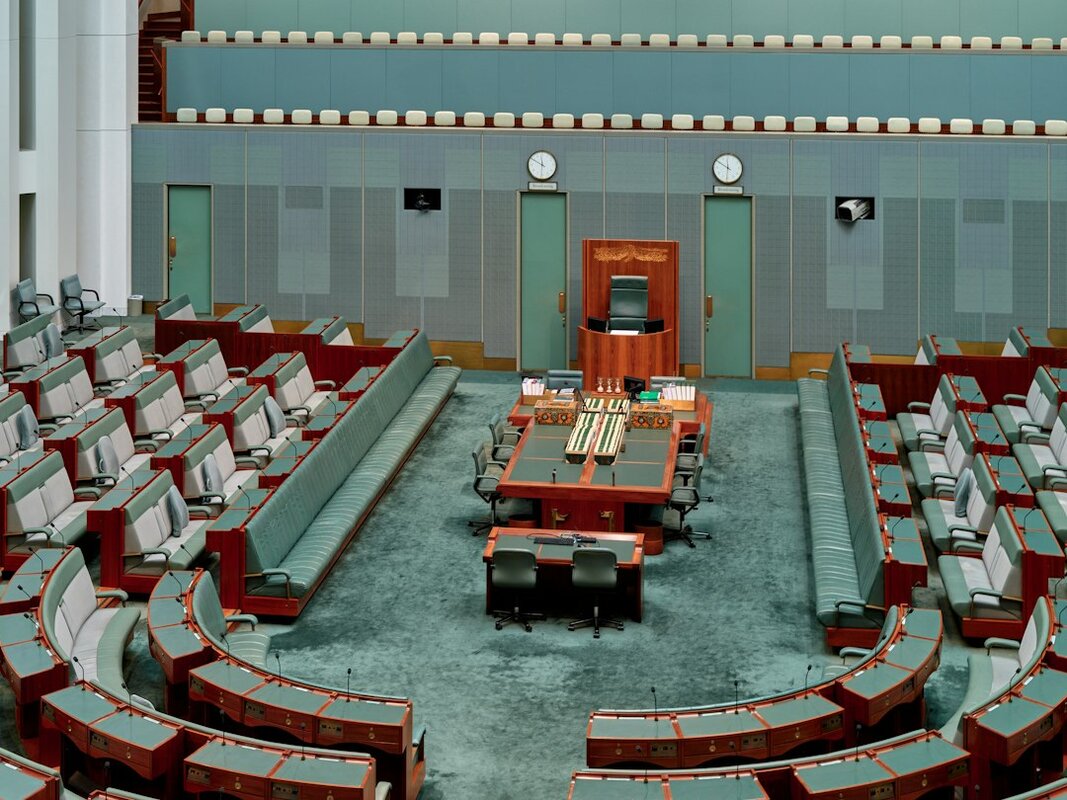
In August we wrote that NIS2 is not Irish law yet, but it is already in your contracts. Three months on, the first half of that sentence is still true, and the stated aim at the time was to notify Brussels of transposition by the end of 2026. That is 36 days from today. So on 25 November 2026 we asked the Oireachtas itself, through its public API, how far the National Cyber Security Bill has got.
The answer is that it has not started. There is no such bill before either House. We then measured how long Irish government bills actually take once they do start, because that number decides how much warning Irish businesses will get when the law finally arrives.
TL;DR
- We pulled all 656 bills with any Oireachtas activity since 1 January 2024. None is a cyber security bill, and no NIS2 transposition measure has been initiated in either House.
- The Government’s own cyber strategy, published on 7 October 2026, says the draft bill is still being prepared for Cabinet with the Attorney General and Parliamentary Counsel.
- Of 106 government bills signed into law in that period, the median took 83 days from First Stage to signature. The Regulation of Artificial Intelligence Bill 2026 took 32.
- When the cyber bill moves, it will probably move fast, under EU penalty pressure. Expect weeks, not months, between the text appearing and the law applying.
- Most of what NIS2 requires is already fixed in EU text that does not depend on the Irish bill. Build against that now, and keep the Irish specifics as configuration.
What we checked, and how you can check it yourself
The Oireachtas publishes a free, unauthenticated API covering every bill: its sponsor, its stages, the date of each stage, and the Act it became. We requested every bill with activity since 1 January 2024. That returned 656 bills, 135 of them government bills, which is the complete set: the API’s own count and the number of records returned agree.
Not one has “cyber” in its title. Not one transposes Directive (EU) 2022/2555. The General Scheme published on 30 August 2024 remains the only text of the National Cyber Security Bill in the public domain, and a General Scheme is an outline of heads, not a bill. It has no legal force and it will change in drafting.
The Government’s position is consistent with that. Its third National Cyber Security Strategy, launched on 7 October 2026, says the Department of Justice, Home Affairs and Migration is working with the Office of Parliamentary Counsel and the Attorney General’s office to prepare a draft for Government. The bill is listed for priority publication in the autumn legislative programme. Priority publication means it is on the list. It does not mean it has a date.
If you would rather not take our word for it, this one-liner checks the live position. It needs only curl and jq, and it is a reasonable thing to drop into a daily cron job if NIS2 matters to your business:
curl -s "https://api.oireachtas.ie/v1/legislation?bill_source=Government&date_start=2026-10-01&limit=100" \
  | jq -r '.results[].bill
      | select(.shortTitleEn | test("cyber"; "i"))
      | "\(.shortTitleEn): \(.mostRecentStage.event.showAs)"'
Today it prints nothing. The day it prints a line, your lead time has started.
How fast can an Irish bill move?
The Minister’s target is not impossible on paper, so it is worth being precise about why it is unlikely. Of the 656 bills, 106 were government bills that went on to be signed into law. We measured each from its First Stage to the date the President signed it.
| Government bills signed into law (activity since Jan 2024) | Result |
|---|---|
| Bills measured | 106 |
| Median, First Stage to signature | 83 days |
| Fastest quarter | about 32 days or less |
| Signed within 36 days | 35 bills |
| Bills whose long title refers to an EU directive | 14, median 110.5 days, fastest 27 |
| Regulation of Artificial Intelligence Bill 2026 | 32 days (19 June to 21 July) |
A third of government bills pass in five weeks or less, so the speed exists. Look at which bills get it, though. They are Appropriation Bills, emergency measures and short amending bills, and they pass in a rush before a recess: 19 government bills were signed in July 2026 and nine in December 2025. Last Christmas, five government bills that started on or after 1 November were signed before the year ended, and only two of them started after 20 November. (We left out late 2024, when the Dáil was dissolved for the general election.)
The cyber bill would need to be approved by Cabinet, published, initiated and taken through every stage in both Houses before the Dáil rises in mid-December, and then signed and commenced. It would also be competing for floor time with the Finance (No. 2) Bill and the Social Welfare Bill, which are already in committee and have to pass before the year ends. None of that is ruled out by law. It is ruled out by how the Oireachtas has actually behaved for the past two years.
Why the speed still matters to you
The interesting number is not the median. It is the AI bill. The Regulation of Artificial Intelligence Bill 2026 gave effect to the EU AI Act under deadline pressure and created a new State body, Oifig IS na hÉireann, and it still went from First Stage to signature in 32 days, across the summer recess rush. Of the 14 bills that mention a directive in their long title, five were signed within 41 days.
The cyber bill will be under more pressure than any of them. The State has been in breach since 17 October 2024, the Commission referred Ireland to the Court of Justice on 8 July 2026, and the cost of the case grows every month it stays open. When the bill appears, the incentive is to push it through quickly, and quite possibly with a guillotine before a recess.
So the practical warning is this. Most Irish businesses will not see the final text of the National Cyber Security Bill until a few weeks before it becomes law. The General Scheme gives an outline, but the schedule of sectors, the registration process and the enforcement provisions are exactly the parts that change in drafting. Anyone waiting for “the Irish rules” before starting work is planning around a lead time they will not get.
What you can build now, because it does not depend on the bill
NIS2 is a directive, so Ireland gets to choose its competent authorities, its penalty amounts above the EU floor, and the paperwork. Ireland does not get to choose the substance. Three sources fix most of the engineering work already, and none of them is waiting on the Oireachtas.
Article 21(2) of the directive. These are the ten risk-management measures, and the list is in the directive word for word: risk analysis and information system security policies, incident handling, business continuity including backups and crisis management, supply chain security, security in acquisition, development and maintenance including vulnerability handling, assessing whether the measures work, basic cyber hygiene and training, cryptography, human resources security with access control and asset management, and multi-factor authentication. Each one becomes a backlog item: an asset inventory that is generated rather than typed up, backups whose restores are tested, MFA enforced at the identity provider instead of app by app, and an SBOM for whatever you ship.
Commission Implementing Regulation (EU) 2024/2690. If you run digital infrastructure (cloud, data centre, DNS, CDN, a managed service provider or a managed security service provider, a marketplace or a platform), this regulation already spells out the technical requirements and the thresholds at which an incident counts as significant. It is the closest thing to a specification that NIS2 has. An Irish MSP that wants to know what “appropriate” will mean in practice can read the annex today.
The NCSC’s draft risk management measures. The National Cyber Security Centre has published draft guidance on what it will expect. It is a draft, but it comes from the authority that will supervise most entities, and it is the best available signal of how Irish supervision will read Article 21.
The reporting pipeline we described in our post on the Cyber Resilience Act’s 24-hour clock also carries over almost unchanged. NIS2’s early warning, notification and final report are triggered by becoming aware of a significant incident, which means detection and triage, and that is engineering work whatever the Irish Act ends up saying.
What to hold as configuration, not code
Some decisions do depend on the Irish text, and these are the ones not to hard-code. The General Scheme proposes the NCSC as lead competent authority and CSIRT, with sectoral regulators alongside it, so the authority you report to, where you register and the format you submit in are all unknowns. Penalties will be at least the directive’s maximums of €10 million or 2% of worldwide turnover for essential entities and €7 million or 1.4% for important entities, but the Irish figures and the personal liability for management in the General Scheme could both change.
In practice that means one well-tested internal incident record, with exporters to whatever endpoint and form each authority ends up wanting. It means a register of entity classification that you can re-run against the final sector schedule in an afternoon. And it means a board briefing pack built on the directive’s management body obligations in Article 20, which will survive transposition intact. If the bill arrives in a hurry, you change configuration, not architecture.
One more point for anyone tempted to treat the delay as a holiday. Your customers in member states that have transposed, such as the Netherlands since the referral, are under the regime today. Their supplier questionnaires do not have an “Ireland hasn’t legislated” box. As we argued in August, the regulation reaches most of our audience as a supplier first and as a regulated entity later, if at all.
Where we come in
REPTILEHAUS builds and runs infrastructure for Irish companies, and most of NIS2’s real work is the work we already do: identity and MFA rollouts, infrastructure-as-code that produces an asset inventory as a side effect, tested backup and restore, CI pipelines that emit SBOMs, and incident tooling that can turn a 3am alert into a report someone can submit. If you want that groundwork done before the Irish bill turns up with a few weeks’ notice, get in touch.
Method notes
Data came from the Houses of the Oireachtas Open Data API (api.oireachtas.ie/v1/legislation), queried on 25 November 2026 with date_start=2024-01-01. The result count matched the API’s reported bill count (656). We searched short and long titles for cyber security and for NIS2 terms. Durations run from the first date of First Stage to the date the President signed the Act, for government bills with status “Enacted” (106 bills). The directive subset is every enacted government bill whose long title contains the word “directive”, which is a proxy and not a list of transposition measures. The strategy details come from the Law Society Gazette’s report of 7 October 2026 and the National Cyber Security Strategy 2030.