
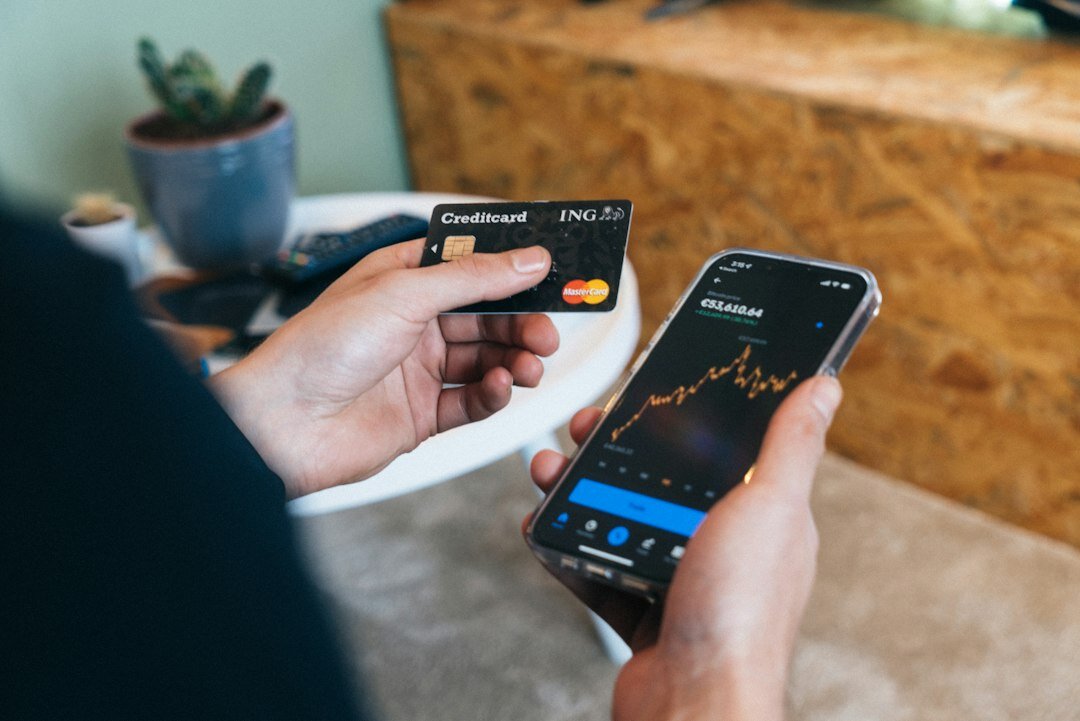
In the week before Black Friday, a card skimmer ran on the mobile checkouts of Lascana, Samsonite, American Tourister, Revolve and FWRD. InfoHawk’s write-up, published on 27 November, describes the trick that makes it worth your attention: the payload arrived, and the stolen card details left, over a WebRTC data channel relayed through Cloudflare’s TURN service. That is the plumbing behind browser video calls, and it sits outside the Content Security Policy rules meant to stop exactly this kind of exfiltration.
On 27 November we fetched the homepage and checkout of 41 Irish online shops with a mobile browser profile and read the security headers they send back. Two of the 41 set connect-src, the one header rule that blocks this kit’s set-up. Neither of those two blocks eval.
TL;DR
- A Black Friday card skimmer fetched its code and sent stolen card data over WebRTC, which Content Security Policy cannot block in any shipping browser.
- The CSP spec defines a
webrtc 'block'directive, but on 27 November Chrome 158, Firefox 161, Safari 27.2 and Edge 158 all fail the official blocking tests. - Of 41 Irish online shops we checked, 12 send no CSP at all and 27 send one that restricts neither scripts nor network connections.
- Only 2 set
connect-src, the rule that stops this kit’s set-up requests. Both allow'unsafe-eval', which the payload needed, and both allowlist hosts where anyone can run code. - The fix is a tag-free payment page with its own strict policy, tested on a phone-sized screen, because that is the only place this skimmer switched on.
Why WebRTC walks past your CSP
In a Content Security Policy, connect-src controls where fetch, XHR, WebSocket and beacon requests may go, so a tight one stops a skimmer posting card numbers to an unknown domain. WebRTC is not covered by it. Once a peer connection is negotiated, data flows over a channel the policy never inspects. The CSP Level 3 draft does define a fix, a webrtc directive that takes 'allow' or 'block'. Nobody has shipped it. We pulled the Web Platform Tests results for 27 November: every engine passes the three tests where WebRTC should be allowed (trivially, since nothing is blocked) and every engine fails both tests where it should be blocked. MDN’s compatibility data, version 8.1.11 from 26 November, does not list the directive at all.
That leaves two places CSP can still bite. This kit needed two ordinary HTTP requests to fetch its relay details and send its WebRTC offer, and connect-src sees those. It also ran the code it received through eval, which a script-src without 'unsafe-eval' refuses. Either rule breaks the chain. The next kit may not need the HTTP step, so treat connect-src as the lock on today’s door, not a permanent one.
What we measured
We started from 86 Irish retail, pharmacy, grocery and lifestyle domains. Dead domains, sites that served us a Cloudflare challenge, and non-retail sites were dropped, leaving 41 that returned a real page. For each we requested / and /checkout with an iPhone Safari user agent, followed redirects, and parsed every enforced Content-Security-Policy header and meta tag. With an empty basket, most checkout URLs land on the cart or the homepage, so this measures site-wide policy rather than the final payment step.
| Finding (41 Irish online shops, 27 Nov 2026) | Sites |
|---|---|
| No Content Security Policy at all | 12 |
| A CSP that restricts neither scripts nor connections | 27 |
A connect-src rule (directly or via default-src) |
2 |
A script-src that blocks eval |
0 |
The webrtc directive |
0 |
| A report-only policy (watches, blocks nothing) | 5 |
| Google Tag Manager loaded in the page source | 26 |
The 27 “header but no protection” sites send some mix of frame-ancestors, upgrade-insecure-requests and block-all-mixed-content. Useful against clickjacking, useless against a malicious script, and they make a quick header scan look greener than it is.
Read the Shopify number fairly
Nineteen of the 41 shops run on Shopify, and all 19 send the identical platform default header. That looks bad, but it is the wrong place to look. On Shopify the payment step happens on Shopify’s own checkout, where theme code does not run, and tracking pixels are loaded in a sandbox: app pixels in a web worker, custom pixels in an iframe with only allow-scripts and allow-forms. A compromised pixel there cannot read the card form.
The fair worry is the other 22, where the retailer or its agency owns the checkout page. Twelve of those send no policy at all, eight send a cosmetic one, and two send a real one. Some will keep card fields in a payment provider’s iframe, which helps, but a script on the parent page can still draw a fake card form over the real one.
The two real policies, and their holes
The two shops with a genuine connect-src are ahead of everyone else we checked, and their policies show how allowlists decay. Both include 'unsafe-eval' in script-src, almost certainly because a marketing tag needed it. That is the exact capability this kit used to run its payload.
Both connect-src lists include wildcards over hosts where anyone can run their own code. One allows *.google.com, which covers Google Apps Script web apps. The other allows *.run.app and *.azurewebsites.net, which are Google Cloud Run and Azure App Service hostnames that any account holder can deploy to, plus localhost:*. Kaspersky documented skimmers sending card data to the attacker’s own Google Analytics property back in 2020, precisely because analytics hosts are always allowed. Every analytics and ad domain in your connect-src is a potential exit.
What we would put on a payment page
The pattern is the same one InfoHawk recommends and the same one we argued for after the Adform compromise in August: treat the payment page as a different, smaller website.
- No marketing tags on payment steps. Give checkout its own template and a Google Tag Manager blocking trigger for payment paths; fire conversions on the confirmation page. The 16 November Optimizely incident, which pushed malicious code to 178 organisations’ sites through a vendor’s servers, is the reminder that a trusted vendor is still someone else’s code.
- Card fields in your provider’s iframe. Hosted fields or a hosted payment page keep the card number out of your page’s reach. This is also what keeps you on PCI DSS SAQ A, which since 31 March 2025 carries an eligibility criterion that you confirm your site is not susceptible to attacks from scripts. If you are not SAQ A eligible, requirements 6.4.3 and 11.6.1 already make script inventory and tamper detection mandatory.
- A strict policy on that page only. You do not need to fix CSP across the whole site to protect checkout. Something like this, with nonces generated per response:
Content-Security-Policy:
  default-src 'none';
  script-src 'nonce-RANDOM' 'strict-dynamic';
  connect-src 'self' https://api.your-psp.example;
  frame-src https://js.your-psp.example;
  img-src 'self'; style-src 'self'; font-src 'self';
  form-action 'self'; base-uri 'none'; object-src 'none';
  frame-ancestors 'none';
  webrtc 'block';
  report-to csp-endpoint
No 'unsafe-eval', no analytics hosts, and a connect-src naming only you and your payment provider. The webrtc 'block' line does nothing today; browsers ignore unknown directives, so it is free insurance for the day they honour it. Run it report-only for a week, then enforce.
- Test where the attacker aims. This kit only ran on small touch screens, and on at least one site only at
/checkout. A desktop homepage scan would have reported all clear. A scheduled headless run on a mobile profile that walks to the payment step and logs any peer connection is cheap:
const { chromium, devices } = require('playwright');

(async () => {
  const browser = await chromium.launch();
  const ctx = await browser.newContext({ ...devices['iPhone 13'] });
  await ctx.addInitScript(() => {
    const Orig = window.RTCPeerConnection;
    if (!Orig) return;
    window.RTCPeerConnection = function (cfg, ...rest) {
      console.log('RTC_OPENED ' + JSON.stringify(cfg && cfg.iceServers));
      return new Orig(cfg, ...rest);
    };
    window.RTCPeerConnection.prototype = Orig.prototype;
  });
  const page = await ctx.newPage();
  page.on('console', m => {
    if (m.text().startsWith('RTC_OPENED')) console.error('ALERT', m.text());
  });
  await page.goto('https://shop.example.ie/checkout');
  // add a test product and step through to payment here
  await browser.close();
})();
A checkout has no business opening a WebRTC connection. If that alert ever fires, something on the page is not yours.
The uncomfortable bit
The loader reached the five retailers through a cookie-banner setting, an ad pixel and a tampered CDN file: ordinary integrations every shop runs. Most Irish shops we checked give the browser no instructions about what those scripts may do, and the WebRTC blind spot will not close before the next peak season.
If you run an online shop and are not sure what your checkout would do with a script like this, we can find out. REPTILEHAUS builds and hardens e-commerce platforms and payment integrations, including the unglamorous parts like per-page security headers and mobile monitoring. Get in touch and we will start with a review of your payment page.
📷 Photo by CardMapr.nl on Unsplash